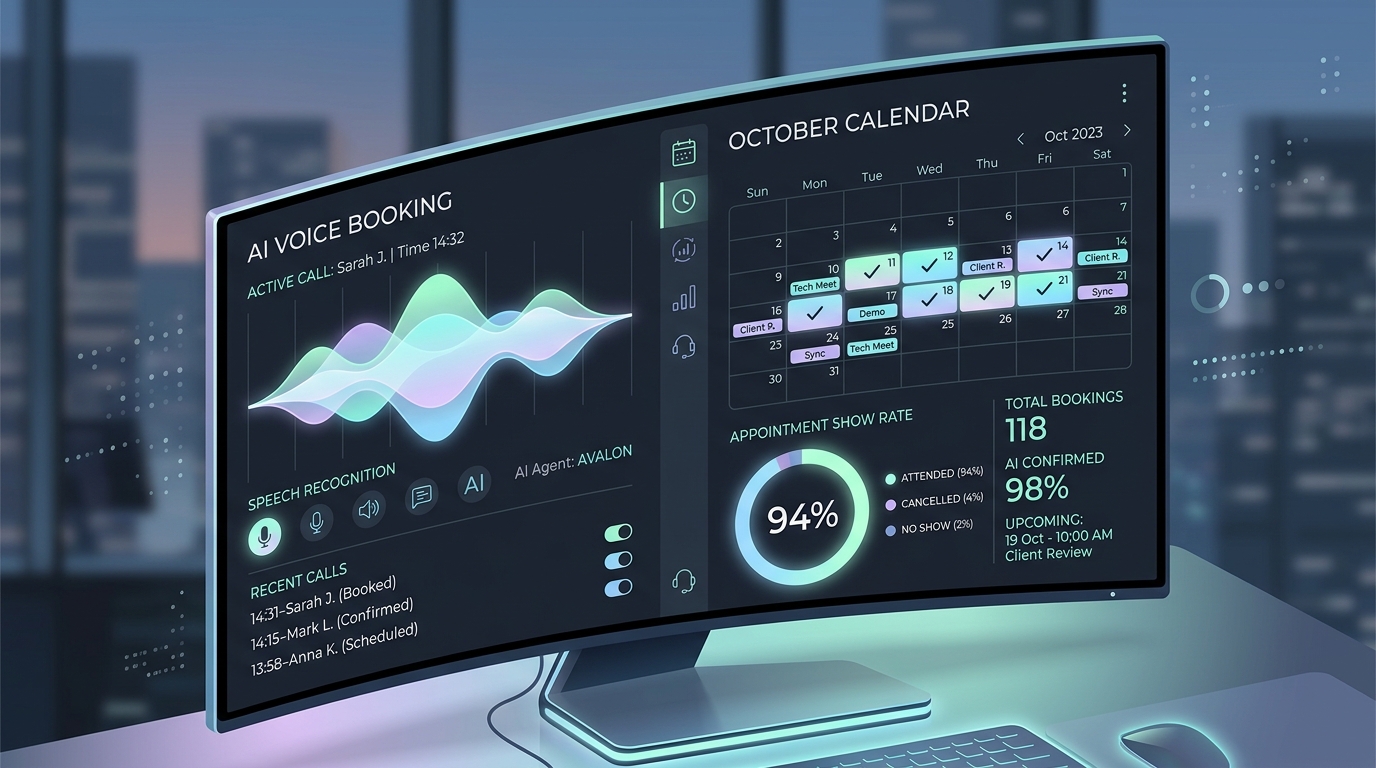
An empty appointment slot costs money whether it’s a dental chair, a salon station, a service truck, or a consultation room. Most no-shows aren’t malicious — they’re forgotten, unclear, or too much friction to reschedule. AI voice agents tackle that problem directly, calling to confirm, reminding at the right moment, and making rescheduling as easy as answering the phone. Here’s how they work and what a well-designed reminder workflow actually looks like.
Quick answer: AI voice agents increase appointment show rates by placing timely, natural-sounding confirmation and reminder calls, letting customers reschedule or cancel in the same call instead of doing nothing, and following up on unconfirmed appointments without requiring staff time. The impact comes from removing friction — a caller who might have ignored a text can quickly reschedule during a two-minute call instead of simply not showing up.
Most no-shows trace back to a handful of common causes: the appointment was forgotten, life got in the way and rescheduling felt like a hassle, or the original booking confirmation got lost in a text thread or inbox. Each missed appointment isn’t just an empty slot — it’s the staff time already allocated, the opportunity cost of a booking that could have gone to another customer, and in some industries, a disrupted care or service continuity for the person who missed it.
| Common No-Show Cause | How an AI Voice Agent Addresses It |
|---|---|
| Forgot the appointment | Places a reminder call close to the appointment time, timed for real attention |
| Rescheduling felt like too much hassle | Lets the customer reschedule on the same call, no hold time or callback needed |
| Confirmation text got buried or ignored | A phone call demands attention differently than a text notification does |
| No easy way to cancel in advance | Frees the slot immediately when a customer cancels during the call, instead of losing it silently |
| Staff too busy to make manual reminder calls | Handles reminder calls at scale without pulling staff off other work |
| Industry | How Reminder Calls Help |
|---|---|
| Healthcare & dental | Confirms visits, offers easy rescheduling, reduces disrupted care continuity |
| Salons & spas | Frees up stylist or therapist time slots early enough to fill from a waitlist |
| Home services | Confirms technician visits, reducing wasted truck rolls and drive time |
| Fitness & wellness | Reminds clients of class or session bookings, supporting retention |
| Professional services | Confirms consultations, especially valuable for high-value appointment slots |
Expert tip: Give the AI voice agent permission to offer the next available slot on the same call when a customer wants to reschedule. Removing the “I’ll call back later” step is often what actually saves the appointment.
High Dreams LLC builds AI voice agents that integrate directly with your scheduling system, so confirmations, reminders, and rescheduling happen in real time — not as a disconnected add-on. Our team handles conversation design, integration, and ongoing tuning to keep your calendar full and your no-show rate down.
They serve different purposes and often work best together. A phone call tends to capture attention differently than a text, and it also allows the customer to reschedule immediately rather than needing to reply and wait for a response.
Yes, when it’s connected to your scheduling system in real time. The agent can offer available slots and update the booking directly, rather than just logging a request for staff to handle later.
Many businesses disclose this upfront as part of good practice and customer trust. A well-designed AI voice agent can still hold a natural, efficient conversation even with that disclosure.
A well-configured AI voice agent recognizes requests outside its scope and escalates to a human team member, passing along the appointment details so the customer doesn’t have to repeat themselves.
This depends on your typical booking lead time and industry norms — the right cadence is usually found by testing a call schedule and reviewing whether cancellations happen early enough to rebook the slot.