Scroll through any feed and you will see people turning posts into income. But the reality is more varied, and less automatic, than the highlight reels suggest. This guide compares the main ways to make money on social media, so you can see how each one works, what it requires and where it can go wrong, and choose the ones that fit you or your business.
The main ways to make money on social media are platform monetization programs, subscriptions, tips, brand sponsorships, affiliate marketing, selling physical products, selling digital products, courses and coaching, services, user-generated content for brands, licensing your content, and building an email list or community. Some depend on platform rules. Others, like selling your own products or services, put you in control. No method is guaranteed, and results vary widely.
This article avoids income figures, follower thresholds and payout rates on purpose, because platform programs and terms change often. Check each platform’s current rules, and treat any earnings claim you see online with caution.
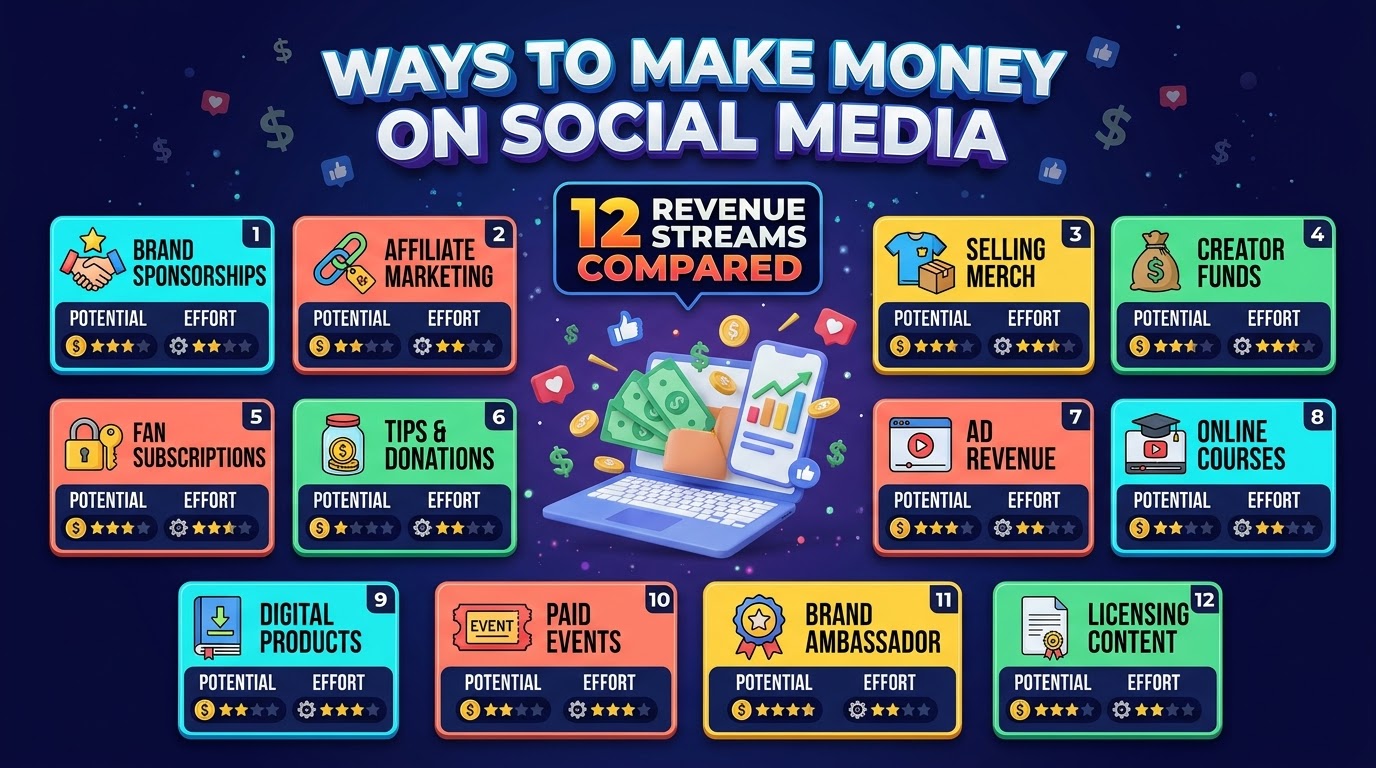
Here are twelve proven ways to make money on social media, from low-effort options to full businesses.
Some platforms share revenue with eligible creators through ads, bonuses or similar programs. Eligibility rules, payout terms and availability differ by platform and country and can change. Treat this as a bonus, not a foundation.
Fans pay a recurring fee for extra content, perks or community access. This can create steadier income than one-off sales, but you must keep delivering value. It works best when you already have a loyal audience.
Many platforms let viewers send tips or virtual gifts during live streams or on posts. It is usually small and unpredictable, so it works best alongside other income.
Brands pay creators to feature their products or services. Success depends on audience fit and trust, not just follower count. Always disclose sponsorships, and only promote what you would genuinely stand behind.
You earn a commission when followers buy through your unique link or code. It has low startup cost, but earnings depend on how relevant your recommendations are. Disclose affiliate links clearly.
Use social media to sell your own products, whether handmade, private label or curated. Some platforms offer built-in shops, and you can also send followers to your own store or marketplaces. This gives you the most control over pricing and branding, but adds costs for inventory and shipping.
Templates, guides, presets, planners, patterns and printables can be sold to your audience with no shipping. Strong demand depends on solving a clear problem. Understand licensing and copyright first. Our guides on physical vs digital products on Etsy and the Etsy digital product rules cover the basics.
If you have skills others want, teach them. Options range from live workshops to recorded courses and one-to-one coaching. This needs real expertise, honest claims and good support for customers.
Social media can be a portfolio. Offer services such as social media management, content creation, design, video editing or copywriting. This is often one of the faster routes to income because you sell a skill, not an audience.
Brands pay creators to produce authentic-style videos and photos they can use in their own marketing. You may not need a large following, because the brand uses the content on its channels. Clear usage rights in your agreement matter.
Photographers, videographers and artists can license clips, images or designs for use by others. Keep ownership clear and use written licenses that define how the work may be used.
An owned audience is the most durable asset. Newsletters, paid communities and email lists can be monetized through sponsorships, subscriptions or product sales, and they do not depend on any platform’s algorithm.
“Followers are rented attention. An email list and a website are property you own.”
| Revenue stream | Startup effort | Control | Main risk |
|---|---|---|---|
| Platform programs | Low to medium | Low | Rule and payout changes |
| Subscriptions | Medium | Medium | Ongoing content pressure |
| Tips and gifts | Low | Low | Unpredictable income |
| Sponsorships | Medium | Medium | Trust loss if overdone |
| Affiliate marketing | Low | Medium | Disclosure and relevance issues |
| Physical products | High | High | Inventory and shipping costs |
| Digital products | Medium | High | Competition and copying |
| Courses and coaching | High | High | Overpromising; support workload |
| Services and freelancing | Low to medium | High | Trading time for money |
| UGC for brands | Low to medium | Medium | Unclear usage rights |
| Content licensing | Medium | High | Misuse of your work |
| Email list and community | Medium | High | Slow to build |
Ratings are general judgments, not measured data. Your results will depend on your niche, audience and effort.
Pick among the ways to make money on social media by starting with what you already do well.
Most successful creators and brands combine two or three streams instead of relying on one.
Follow this plan to start with the ways to make money on social media that suit you.
Any of these ways to make money on social media can create legal and tax obligations.
This is general information, not legal or tax advice. Rules differ by location, so consult a qualified professional.
Most people who struggle with the ways to make money on social media repeat the same errors.
Businesses use these ways to make money on social media with a focus on sales and leads.
HighDreamsLLC is a Colorado-based AI and digital growth agency. We manage e-commerce across Amazon, Walmart, Etsy and eBay, and we build the AI chatbots, voice agents, workflow automation, websites and apps that turn attention into customers. If you want help turning social media traffic into sales, we can design the website, funnels and automation behind it.
Common options include platform monetization programs, subscriptions, tips, brand sponsorships, affiliate marketing, selling physical or digital products, courses and coaching, services, user-generated content for brands and growing an email list. The best fit depends on your audience, skills and goals.
There is no single number. Some platform programs have eligibility requirements that change over time, while selling your own products or services can start with a small, engaged audience. Check each platform’s current rules.
In many places, yes. Advertising rules generally require clear disclosure of material connections, such as payment or free products. The U.S. Federal Trade Commission publishes guidance for endorsers and brands. Check current rules for your location and consult a professional.
Relying on one platform is risky because rules, algorithms and payouts can change. Many creators and businesses use social media to build awareness, then move followers to channels they own, such as an email list or website.
Yes. Businesses can sell products directly, generate leads, drive traffic to their website, and handle customer questions through messages. Many combine organic content, paid promotion and automation.
The best ways to make money on social media are the ones built on trust and an offer people actually want. Start with one or two streams that match your skills, disclose honestly, track what pays and steadily move your audience to channels you own. Social platforms can change quickly, but a loyal audience, a clear offer and your own website travel with you.
Sources and further reading: Federal Trade Commission, Internal Revenue Service. Platform programs, eligibility rules and regulations change often; verify current details with each platform and official source. This article is general information, not legal, tax or financial advice, and it makes no promise of income.