Quick Answer
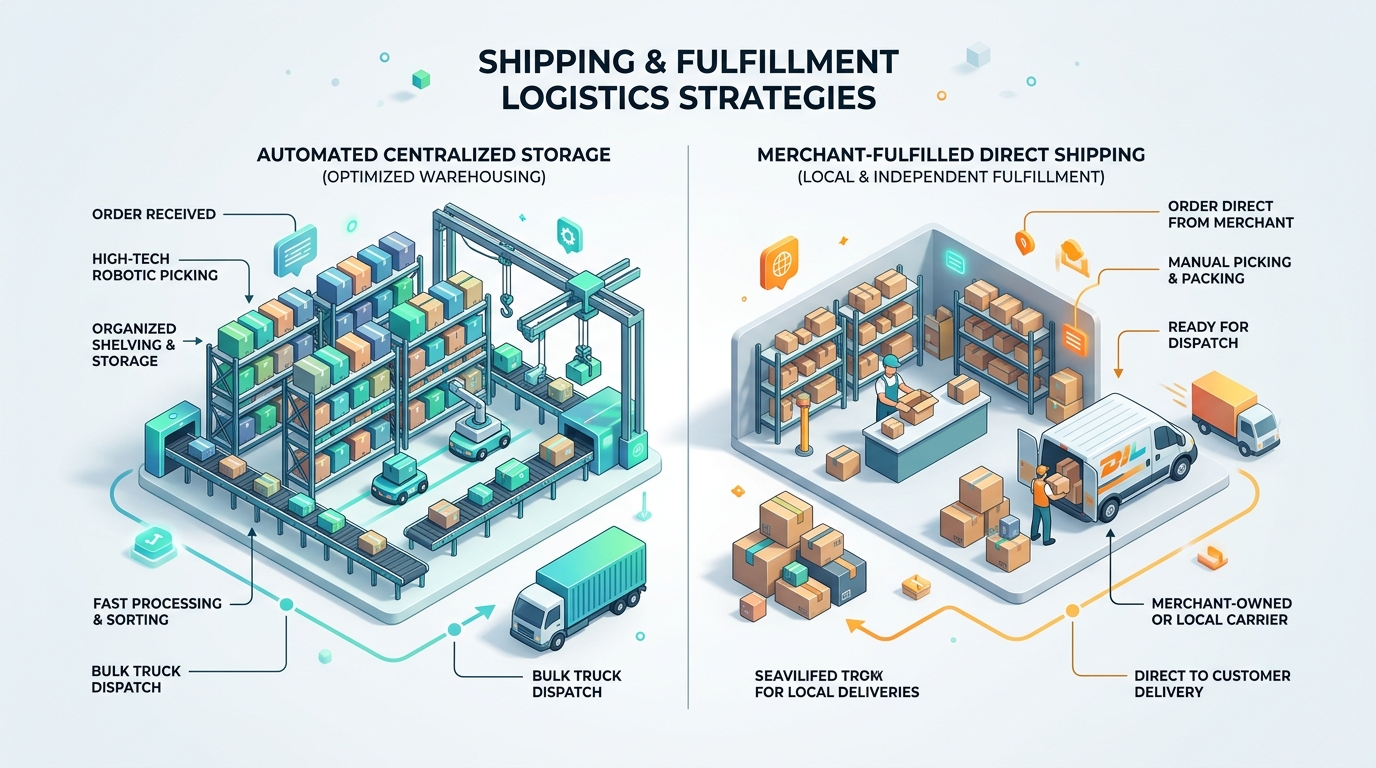
There’s no single “best” Amazon fulfillment strategy — it depends on order volume, margins, and how much control you want over the customer experience. FBA (Fulfillment by Amazon) is the easiest way to get the Prime badge and offload storage and shipping, but it comes with fees that eat into thin margins. FBM (Fulfillment by Merchant) gives you full control and lower per-order costs but loses Prime eligibility unless you qualify for Seller Fulfilled Prime (SFP), which has strict performance requirements. Many established sellers land on a hybrid model: FBA for fast-moving, small items, and FBM or a 3PL for bulky, seasonal, or low-margin products.
Choosing how to fulfill Amazon orders is one of the highest-leverage decisions a seller makes. It affects margins, cash flow, Prime eligibility, and how much operational work lands on your plate every day. Get it wrong and you’re either bleeding money to fulfillment fees or losing the Buy Box because you don’t have Prime.
This guide compares the main Amazon fulfillment strategies side by side — FBA, FBM, Seller Fulfilled Prime, hybrid approaches, and third-party logistics — so you can match your fulfillment method to your product type and order volume instead of defaulting to whatever’s most common.
What Are the Main Amazon Fulfillment Strategies?
Amazon sellers generally choose from five approaches, often combining more than one across a catalog:
- Fulfillment by Amazon (FBA) — you ship inventory to Amazon’s warehouses; Amazon picks, packs, ships, and handles customer service and returns.
- Fulfillment by Merchant (FBM) — you store, pack, and ship orders yourself, or through your own warehouse or team.
- Seller Fulfilled Prime (SFP) — you fulfill orders yourself but meet Amazon’s speed and reliability standards closely enough to display the Prime badge.
- Hybrid fulfillment — using FBA for some SKUs and FBM/3PL for others, based on size, margin, or seasonality.
- Third-party logistics (3PL) with Multi-Channel Fulfillment (MCF) — an outside warehouse partner handles fulfillment, sometimes using Amazon’s own MCF service to ship non-Amazon orders from FBA inventory.
Fulfillment by Amazon (FBA)
With FBA, inventory sits in Amazon’s fulfillment network and Amazon handles the entire shipping and returns process. It’s the most hands-off option and the fastest path to Prime eligibility, which matters for winning the Buy Box.
- Pros: Prime badge by default, Amazon handles customer service and returns, access to Amazon’s fast shipping network, less day-to-day labor.
- Cons: Storage and fulfillment fees reduce margin, less control over packaging and unboxing experience, inventory can get held or mismanaged in Amazon’s warehouses, long-term storage fees on slow-moving stock.
- Best for: Small, lightweight, fast-moving products with healthy margins.
Fulfillment by Merchant (FBM)
With FBM, you control the entire fulfillment process — your own warehouse, your own packaging, your own shipping carrier relationships.
- Pros: Full control over packaging and branding, no FBA storage or pick-and-pack fees, more flexibility for bulky, fragile, or custom items.
- Cons: No automatic Prime badge, you handle customer service and returns yourself, shipping speed depends entirely on your own operation, harder to compete for the Buy Box against Prime listings.
- Best for: Large or heavy items, low-margin products where FBA fees would erase profit, sellers who already run their own fulfillment operation.
Seller Fulfilled Prime (SFP)
SFP lets qualifying sellers keep the Prime badge while fulfilling orders themselves. Amazon requires consistently meeting strict delivery speed and reliability metrics before granting and maintaining SFP status.
- Pros: Prime badge without paying FBA storage fees, full control over packing and branding, inventory never leaves your hands.
- Cons: Demanding performance requirements (on-time delivery, low cancellation rate), enrollment can be limited or paused by Amazon depending on current program availability, requires a genuinely reliable shipping operation.
- Best for: Established sellers with a proven, fast, reliable in-house or 3PL shipping process who want Prime without FBA fees.
Hybrid Fulfillment
Many experienced sellers don’t pick one method for the entire catalog. Instead, fast-moving, compact, high-margin SKUs go through FBA for the Prime badge and hands-off logistics, while bulky, seasonal, or thin-margin SKUs stay on FBM or a 3PL to avoid storage fees eating into already-tight profit.
Third-Party Logistics (3PL) and Multi-Channel Fulfillment (MCF)
A 3PL is an outside warehouse and shipping partner, separate from Amazon, that can fulfill orders across multiple sales channels (Amazon, Shopify, Walmart, Etsy) from one inventory pool. Amazon’s own Multi-Channel Fulfillment service does something similar in reverse — it lets sellers ship non-Amazon orders using inventory already sitting in FBA warehouses.
- Pros: One inventory system across multiple marketplaces, often more flexible packaging options than FBA, useful for sellers scaling beyond Amazon alone.
- Cons: Doesn’t automatically grant the Prime badge (unless paired with SFP-style performance), adds another vendor relationship to manage, cost structure varies by provider.
- Best for: Multi-marketplace sellers who want centralized inventory without being fully dependent on Amazon’s warehouses.
Editorial note: This article does not have live web access in this session, so exact current FBA fee amounts, storage fee tiers, and SFP enrollment status have intentionally been left out rather than risk quoting outdated figures — these change periodically. Check current rates in Seller Central under the Fee Schedule before making a fulfillment decision, or request a follow-up pass with live sourcing to add verified figures.
Comparison: Amazon Fulfillment Strategies
Directional comparison — confirm current fees and program eligibility in Seller Central.
| Strategy |
Prime Badge |
Control Level |
Operational Effort |
Best Fit |
| FBA |
Yes, automatic |
Low |
Low |
Small, fast-moving, high-margin items |
| FBM |
No (by default) |
High |
High |
Bulky, fragile, low-margin, or custom items |
| Seller Fulfilled Prime |
Yes, if qualified |
High |
High |
Established sellers with proven fast shipping |
| Hybrid |
Partial |
Medium |
Medium |
Mixed catalogs with varied margins and sizes |
| 3PL / MCF |
Depends on setup |
Medium |
Medium |
Multi-marketplace sellers centralizing inventory |
How to Choose the Right Fulfillment Strategy
- Calculate true per-order cost for each option, including storage, pick-and-pack, and long-term storage fees where applicable.
- Check your product’s size and weight tier — bulky or heavy items are often more expensive to fulfill through FBA than FBM.
- Assess how much Prime matters for your category. Some categories are far more Prime-sensitive for Buy Box wins than others.
- Be honest about your own shipping reliability before pursuing SFP — missed performance targets can suspend the program status.
- Model seasonality. Products with sharp seasonal spikes can rack up FBA long-term storage fees during the off-season.
- Reassess quarterly. Fulfillment fees, program requirements, and your own order volume all shift — a strategy that worked at 50 orders a month may not work at 500.
Common Mistakes Sellers Make with Fulfillment
- Putting every SKU into FBA by default without checking whether fees make sense for that specific product’s size and margin.
- Underestimating long-term storage fees on slow-moving or seasonal inventory sitting in FBA warehouses.
- Pursuing SFP without a reliable shipping operation already in place, risking suspension from the program.
- Ignoring returns handling when comparing FBA vs. FBM — return policies and costs differ significantly between the two.
- Never revisiting the decision as order volume, product mix, or fee structures change.
Business Applications by Seller Type
- New sellers testing products: FBA reduces operational overhead while validating demand.
- Private label brands scaling fast: Hybrid fulfillment protects margin on bulky SKUs while keeping bestsellers Prime-eligible.
- Handmade and made-to-order sellers (including crossover Etsy sellers): FBM or SFP fits better than FBA, since inventory isn’t held in bulk ahead of demand.
- Multi-marketplace sellers (Amazon, Walmart, Etsy, eBay): 3PL or MCF centralizes fulfillment instead of managing separate inventory pools per channel.
- Seasonal sellers: Careful FBA inventory timing avoids long-term storage penalties during off-peak months.
Why Choose High Dreams LLC
Fulfillment strategy isn’t a one-time decision — it shifts as a catalog, margins, and order volume change. High Dreams LLC manages e-commerce operations across Amazon, Walmart, Etsy, and eBay, helping sellers evaluate fulfillment mix, optimize listings, and build the automation and workflow systems that keep multi-channel selling manageable instead of chaotic.
Not Sure Which Fulfillment Mix Fits Your Catalog?
Talk to High Dreams LLC about structuring FBA, FBM, and multi-channel fulfillment around your actual product mix and margins.
Get Started
View E-Commerce Services
Frequently Asked Questions
Is FBA or FBM better for a new Amazon seller?
FBA is generally easier for new sellers since Amazon handles storage, shipping, and customer service, letting you focus on sourcing and listings while testing demand.
Can I use FBA for some products and FBM for others?
Yes. This hybrid approach is common among established sellers — fast-moving, high-margin items go through FBA while bulky or low-margin items stay on FBM or a 3PL.
Do I need Seller Fulfilled Prime to compete for the Buy Box?
Not necessarily, but Prime-badge listings generally have an advantage in Prime-sensitive categories. SFP is one path to that badge without using FBA, but it requires meeting strict delivery performance standards.
What’s the difference between a 3PL and Amazon’s Multi-Channel Fulfillment?
A 3PL is an independent warehouse partner that can fulfill orders across any sales channel. Amazon’s Multi-Channel Fulfillment (MCF) is Amazon’s own service that ships non-Amazon orders using inventory already stored in FBA warehouses.
How often should I re-evaluate my fulfillment strategy?
At minimum quarterly, and any time order volume changes significantly, a new product category is added, or Amazon updates fee structures or program requirements.