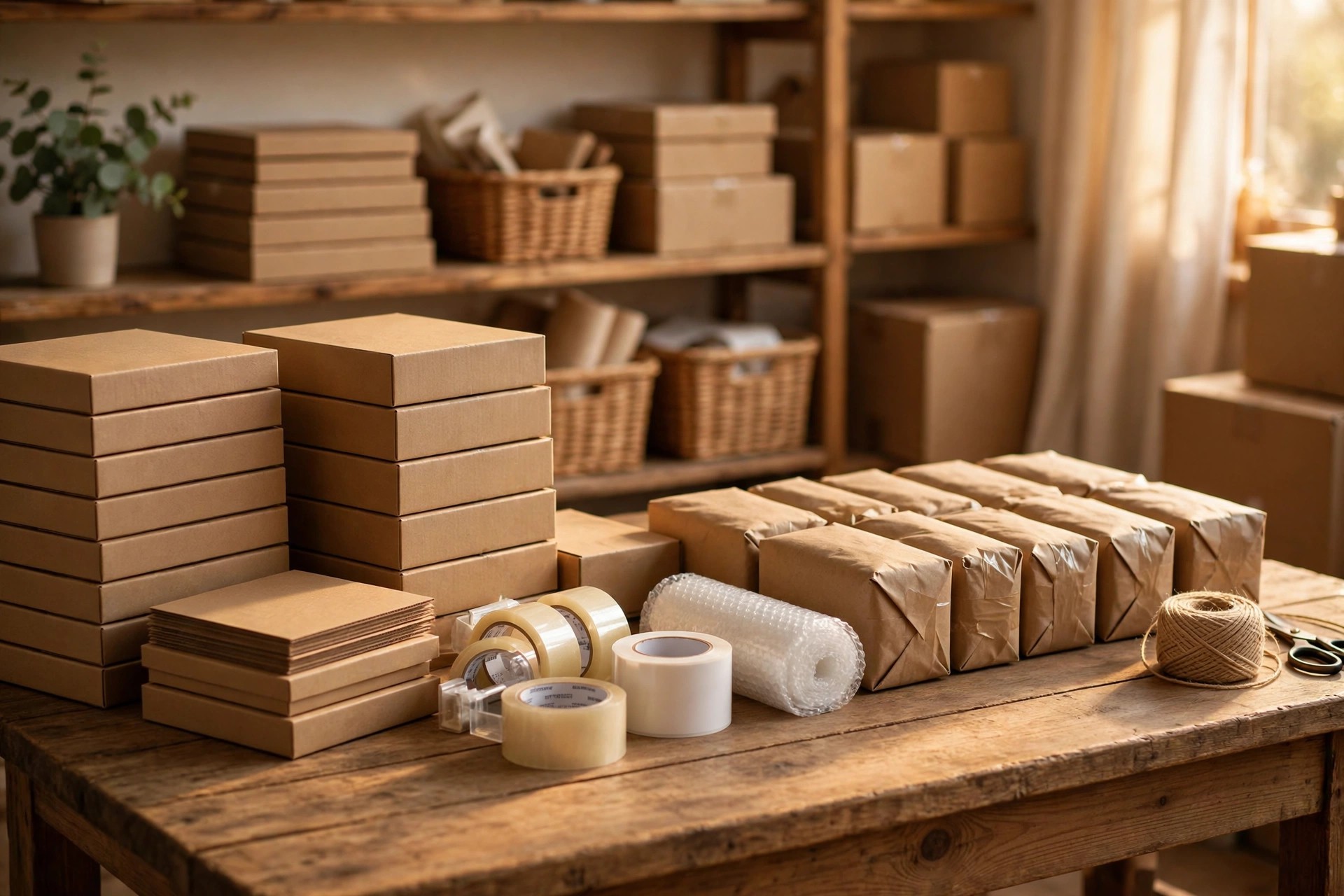
Black Friday is two days away, and the hard work is done. The winners are picked, the listings are checked, the storefront is set up, the five buyer answers are written down, and the stock is watched while you sell. Everything a seller can prepare in advance is prepared. And that is exactly when the next risk shows up — not in the listing, not in the price, and not in the stock, but in the parcel. Friday’s orders arrive fast, and if the packing line is not ready, they pile up on the table while the seller packs, answers messages, and tries to keep up with a day that will not slow down.
This guide is about the packing line: setting it up before Friday, so the orders that come in on Friday leave on Friday. Winners packed first and in one place, boxes, tape and labels counted before the rush, parcels shipped daily, and the buyer told the delivery date up front. A sale is finished when the parcel leaves, not when the buyer pays.
Black Friday 2026 is Friday, November 27, and Cyber Monday is Monday, November 30. With 2 days to go, set up the packing line before Friday — winners packed first and in one place, boxes, tape and labels counted, parcels shipped daily, and the buyer told the delivery date up front — so Friday’s orders leave on time instead of piling up while the seller packs. A sale is finished when the parcel leaves, not when the buyer pays.
In this guide
Packing breaks on Friday for a simple reason: on Friday the seller is doing three jobs at once. The orders are coming in, the messages are coming in, and the parcels are going out — and all three land on the same person, at the same table, at the same time. Before Friday, packing is a calm job done in advance. On Friday, packing is a race, and the pile grows faster than the parcels leave, because every minute spent answering a buyer is a minute not spent taping a box.
That is how the delay starts. Not with a disaster, but with a small pile: five parcels waiting at lunchtime, ten by the afternoon, and a table full of them by the evening, each one a buyer who paid hours ago and has heard nothing since. The buyer does not see the pile. The buyer sees a paid order and a quiet inbox, and the first message they send is the one no seller wants to answer: where is my order?
The first step is the simplest and the one that saves the most time: put the winners in one place, packed and ready, before Friday. The winners are the three to five products picked on Nov 16, the ones the deals are built around and the ones buyers will order most. They should live together — one shelf, one table, one corner of the packing spot — with their boxes, their wrapping, and their labels within arm’s reach. When an order for a winner comes in, the seller walks to one place, picks up one parcel, and it is ready to go.

Everything else can wait its turn. The slow sellers, the one-off items, the products that sell once a day — they can stay where they are, because they do not set the pace of the day. The winners do. If the most-sold parcel is also the fastest to leave, the whole day runs faster: fewer steps, fewer searches through shelves, fewer minutes lost looking for the right box.
Keep the winners’ spot clear of everything else. No returns waiting to be checked, no new stock waiting to be listed, no half-opened boxes from last week. A clear spot with the winners in it is a packing line; a crowded table with the winners somewhere in it is a search. And when a winner starts to run low, the stock watch from Nov 24 will flag it — the packing line and the stock watch work together, one watching what sells, the other moving it out the door.
The second step is to count the supplies before the rush, not during it. Boxes, tape, labels, wrapping, and the delivery notes that go in the box — count them on Wednesday, while there is still time to buy more. A packing line that stops mid-rush because the tape ran out is a line that was never really ready. Count what you have, write the number down, and buy what is missing before Friday morning.
Keep the supplies where the packing happens, not in another room, not at the bottom of a cupboard, and not behind the stock. The box sizes the winners need should be stacked beside the winners. The tape should be on the table, not in a drawer. The labels should be printed or ready to print before the first order, with the printer checked and working. A seller who has to leave the table to find a box is a seller who is not packing, and on Friday every trip away from the table is a parcel that waits longer.
There is one more supply to prepare, and it costs nothing: the words that go in the box. A short delivery note — thank you, what is inside, and when to expect it — and a clear returns note, so the buyer knows what to do if something is wrong. Write them now, print them now, and keep a stack beside the labels.
The third step is the habit that holds the whole line together: ship daily. Every parcel that comes in today leaves today. No parcel waits for tomorrow’s pile, because tomorrow has its own orders, and a parcel that waits twice is a parcel that is late. The daily ship is not a big job if the line is ready — it is the last thing the seller does before the day ends, and it takes as long as the parcels take, no longer.
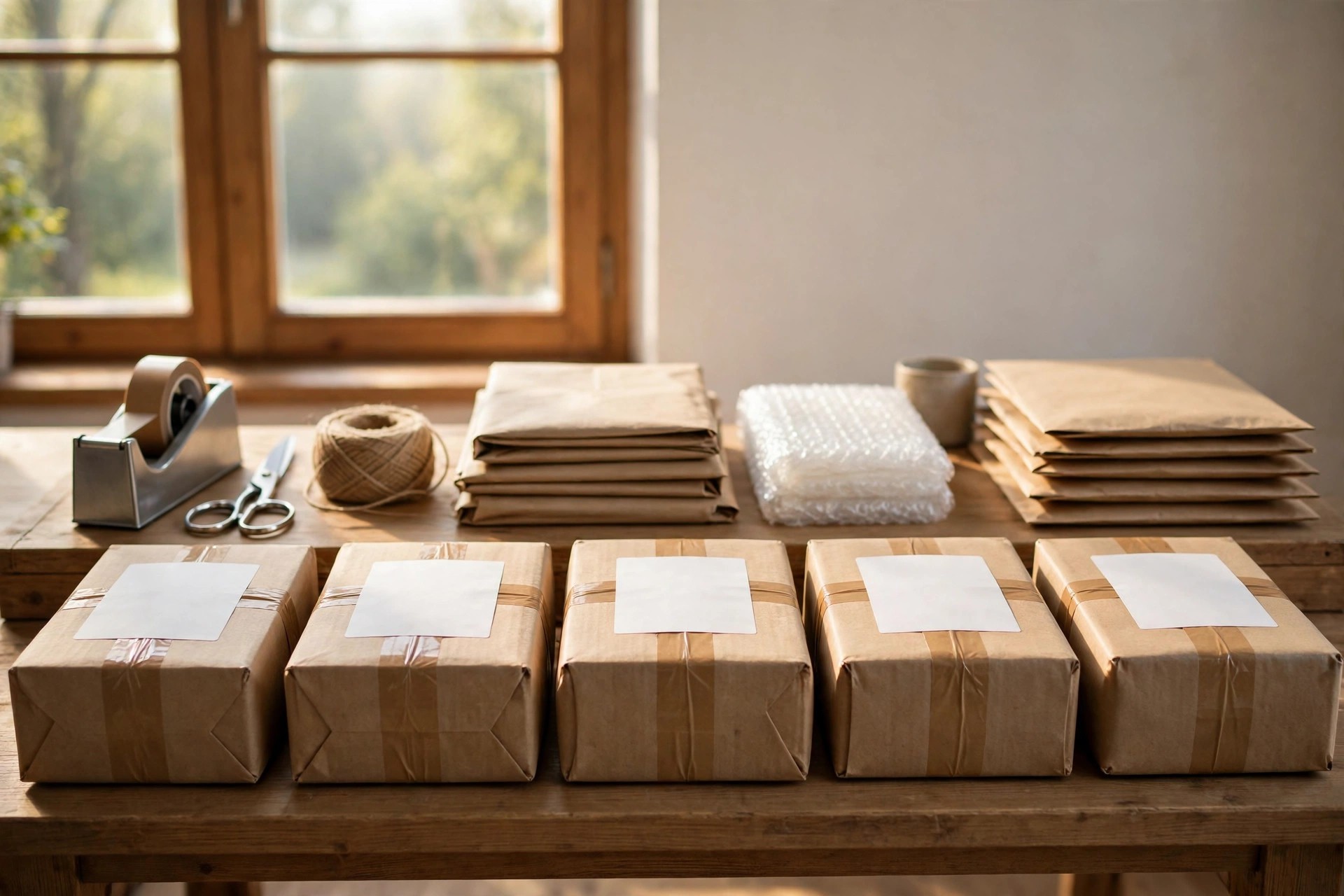
Make the daily ship a fixed part of the day, not a job done when there is time. Pick the carrier drop-off or pickup time in advance, and work backwards from it: orders packed by that time leave today, orders after it leave tomorrow morning. Tell yourself the cutoff, write it down, and keep to it even on the busiest day — because the cutoff is what stops the pile from growing.
Run the same habit on Saturday and Sunday, and on Monday for Cyber Monday. A parcel that waits over the weekend is a parcel that arrives late, and a buyer who paid on Friday does not stop counting the days on Saturday. The watch from Nov 24 flags what runs low; the daily ship makes sure what was sold actually leaves. Together they are the two halves of the same promise: the stock is there, and the parcel is on its way.
The last step is what the buyer finds when the parcel arrives, and it matters more than most sellers think. A parcel that arrives with nothing inside but the product feels like a warehouse sent it. A parcel that arrives with a short delivery note — thank you for the order, what is inside, and the date it was sent — feels like a person sent it. The note costs a minute to write and a few seconds to print, and it is the cheapest way to turn a Black Friday order into a buyer who comes back.
Add a clear returns note as well, and make it easy to find. Not buried under the wrapping, and not written in small print — one short note, near the top of the box, saying how to return something and who to contact. A buyer who knows how to return a parcel is a buyer who is not afraid to order one, and a buyer who is not afraid to order is a buyer who orders again.
Keep the box itself simple. The right size, packed so nothing moves, taped properly, and labelled clearly. A box too big wastes wrapping and looks careless; a box too small crushes what is inside. Pack it as if you were the one opening it — because on the other end, someone is, and the first thing they see is not the product. It is the care that went into sending it.
One table, kept by the desk through the sale.
| Step | Do before Friday | If it slips |
|---|---|---|
| Winners first | Best-sellers in one place, ready to pack | The most-sold parcel is the slowest to leave |
| Labels ready | Boxes, tape and labels counted | Packing stops mid-rush to find supplies |
| Ship daily | Every parcel leaves the same day | Orders pile up and delivery messages follow |
| Tell the buyer | Delivery date up front, tracking when it ships | The buyer asks where the order is |
“A sale is not finished when a buyer pays. It is finished when the parcel leaves on time.”
Packing touches every part of the store — listings, pricing, delivery and returns all meet in the four steps above. High Dreams LLC helps sellers with store setup, product listing, and store management on Amazon, eBay, and Etsy.
High Dreams LLC manages Amazon, eBay, and Etsy stores for sellers who want the work done properly: listings, pricing, returns, ads, and the order handling behind them. We work across Amazon, eBay, and Etsy dropshipping, plus digital services — so the packing line is set against real marketplace steps, not a generic template.
When should the packing line be ready?
Before Friday morning, with 2 days to go — set it up on Wednesday, not after the first orders land.
What do I pack first?
The winners: the best-sellers go in one place, packed and ready, so they leave fastest.
How often should parcels ship during the sale?
Daily — no parcel waits for tomorrow’s pile.
What do I tell the buyer about delivery?
The delivery date up front, and tracking when the parcel ships — checked against your own marketplace’s and carrier’s dates.
Can High Dreams LLC set this up with me?
Yes: message the page for a free store check covering listings, stock watch, and Black Friday readiness.
Black Friday is 2 days away. Set up the packing line before Friday, ship daily, and tell the buyer the delivery date up front. A sale is not finished when a buyer pays. It is finished when the parcel leaves on time.
Related Reading: Read our guides to e-commerce order fulfilment, setting up Black Friday deals on Amazon, eBay & Etsy, picking your Black Friday winners, the AI listing check: fix your Amazon, eBay & Etsy listings before Black Friday, setting up your Black Friday storefront, the Black Friday after-sale mistake: winning the sale, losing the customer, the 7-day Black Friday countdown: your final-week store checklist, the test-sale lesson: run one small deal before Black Friday, answering buyers before Friday: the 5 buyer questions to prepare, and watching the stock while you sell.