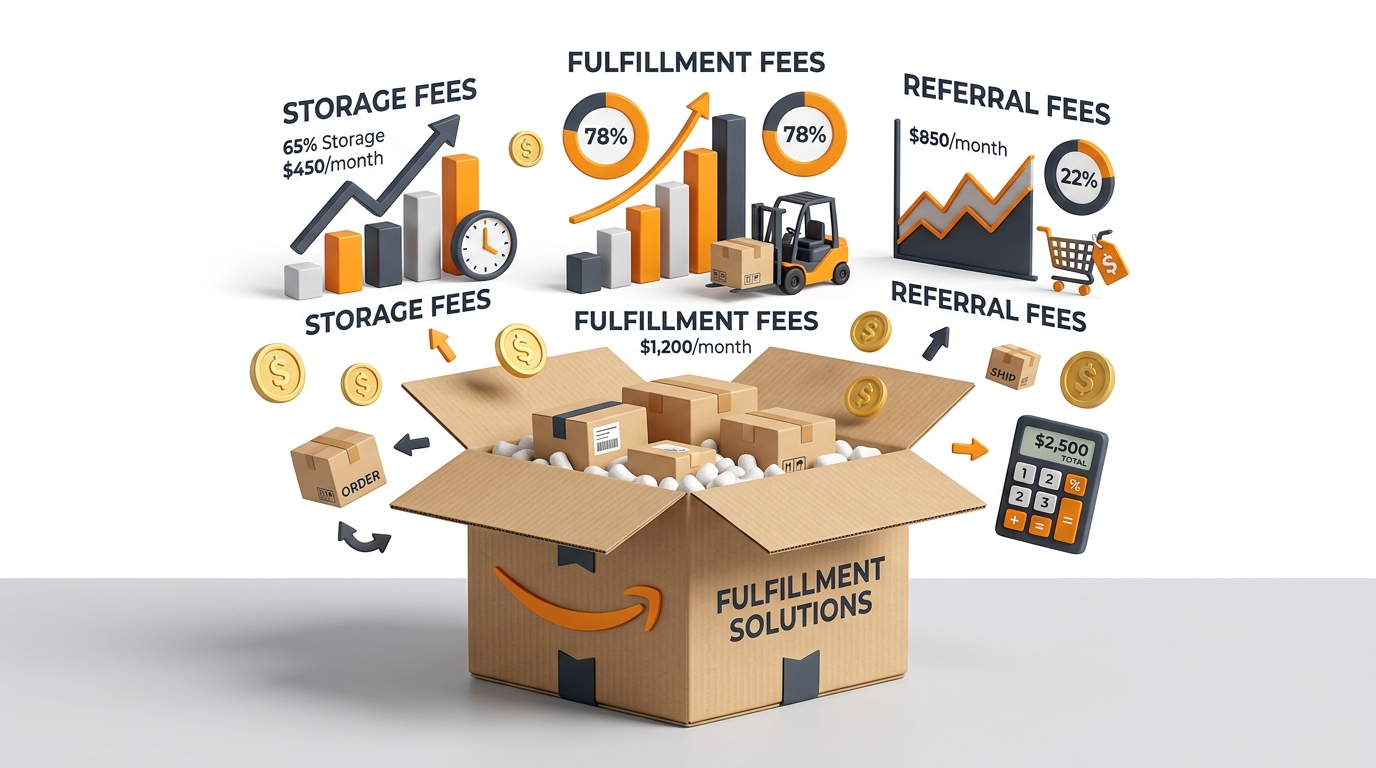
Fulfillment by Amazon (FBA) can take inventory storage and shipping off your plate, but it comes with a fee structure that catches a lot of new sellers off guard. Understanding what you’re charged for — and why — is the difference between pricing products profitably and discovering at the end of the month that fees quietly ate your margin. This guide breaks down every major FBA fee category, how each one is calculated, and where new sellers most often lose money without realizing it.
Quick answer: Amazon FBA sellers typically pay a referral fee (a percentage of the sale price, category-dependent), an FBA fulfillment fee (based on product size and weight tier), monthly inventory storage fees (based on volume, with higher rates in peak season), and potential extra fees for long-term storage, removals, or returns processing. Exact rates change periodically, so always confirm current numbers in Seller Central or Amazon’s official fee schedule before pricing a product.
A note on the numbers in this guide: Amazon updates its FBA fee schedule from time to time, including size-tier definitions and rates. This article explains how each fee works and what drives it, but does not quote specific dollar amounts or percentages, since those can change and outdated figures could lead to mispriced listings. Always check the current fee schedule in Seller Central or Amazon’s official FBA fee resources before finalizing pricing.
| Fee Type | What It’s For | What Drives the Amount |
|---|---|---|
| Referral fee | Amazon’s commission for the sale itself | Product category and sale price |
| FBA fulfillment fee | Picking, packing, and shipping the order | Product size tier and weight |
| Monthly storage fee | Warehousing inventory in Amazon’s fulfillment centers | Cubic footage of inventory and time of year (peak season is typically higher) |
| Long-term storage fee | Inventory sitting in a fulfillment center beyond a set duration | How long units have been stored without selling |
| Removal / disposal fee | Having Amazon return or dispose of unsold inventory | Item size and quantity removed |
| Returns processing fee | Applies in select categories when a customer returns an item | Category and product size |
Rates and thresholds for every row above are set by Amazon and change periodically — confirm current figures in Seller Central before using them in pricing decisions.
The referral fee is Amazon’s cut for facilitating the sale, charged as a percentage of the item’s total sale price. The percentage varies by product category — some categories carry a flat rate, while others use tiered percentages that change above certain price thresholds. Because this fee is category-specific, the same product priced the same way can carry a different referral fee depending on which category it’s listed under, which is worth double-checking during listing setup.
The fulfillment fee covers Amazon picking, packing, and shipping the order to the customer. It’s calculated primarily from the product’s size tier (standard vs. oversize categories, for example) and its dimensional and actual weight. This is one of the fees new sellers most often underestimate, because packaging choices — extra padding, oversized boxes, non-compliant poly bags — can bump a product into a higher size tier and a noticeably higher fee, even if the product itself is small.
Monthly storage fees are based on the cubic footage your inventory occupies in Amazon’s fulfillment centers, not the number of units. Rates are typically higher during peak season months (leading into the holiday shopping period) than the rest of the year, which is part of why sellers carrying inventory into Q4 need to plan storage costs carefully. Inventory that sits unsold for an extended period can also trigger long-term storage fees on top of the standard monthly charge — another reason inventory forecasting matters as much as the fee schedule itself.
Expert tip: Before finalizing a product’s price, run it through Amazon’s official FBA revenue calculator using your actual packaged dimensions and weight — not estimates. Small packaging differences can shift a product into a different fee tier.
High Dreams LLC manages Amazon seller operations end-to-end, including listing optimization, PPC, Brand Registry support, and inventory forecasting that accounts for real fee structures — not rough estimates. If FBA fees are cutting into your margins, our team can help you price accurately and manage inventory to keep storage costs under control.
The referral fee is Amazon’s commission on the sale itself, based on category and price. The fulfillment fee is separate and covers picking, packing, and shipping the order, based on the product’s size and weight.
Storage fees in particular are typically higher during peak season months. Amazon can also update its broader fee schedule periodically, so it’s worth checking Seller Central regularly rather than assuming rates are fixed year-round.
Long-term storage fees are generally tied to how long inventory sits unsold in a fulfillment center. Forecasting demand accurately and avoiding over-ordering slow-moving SKUs is the main way to reduce exposure to these charges.
Yes. Fulfillment fees are tied to size tiers, and oversized or inefficient packaging can push a product into a higher tier than its actual contents would otherwise require.
Amazon publishes its current FBA fee schedule inside Seller Central, along with a revenue calculator that estimates fees for a specific product using its real dimensions, weight, category, and price.