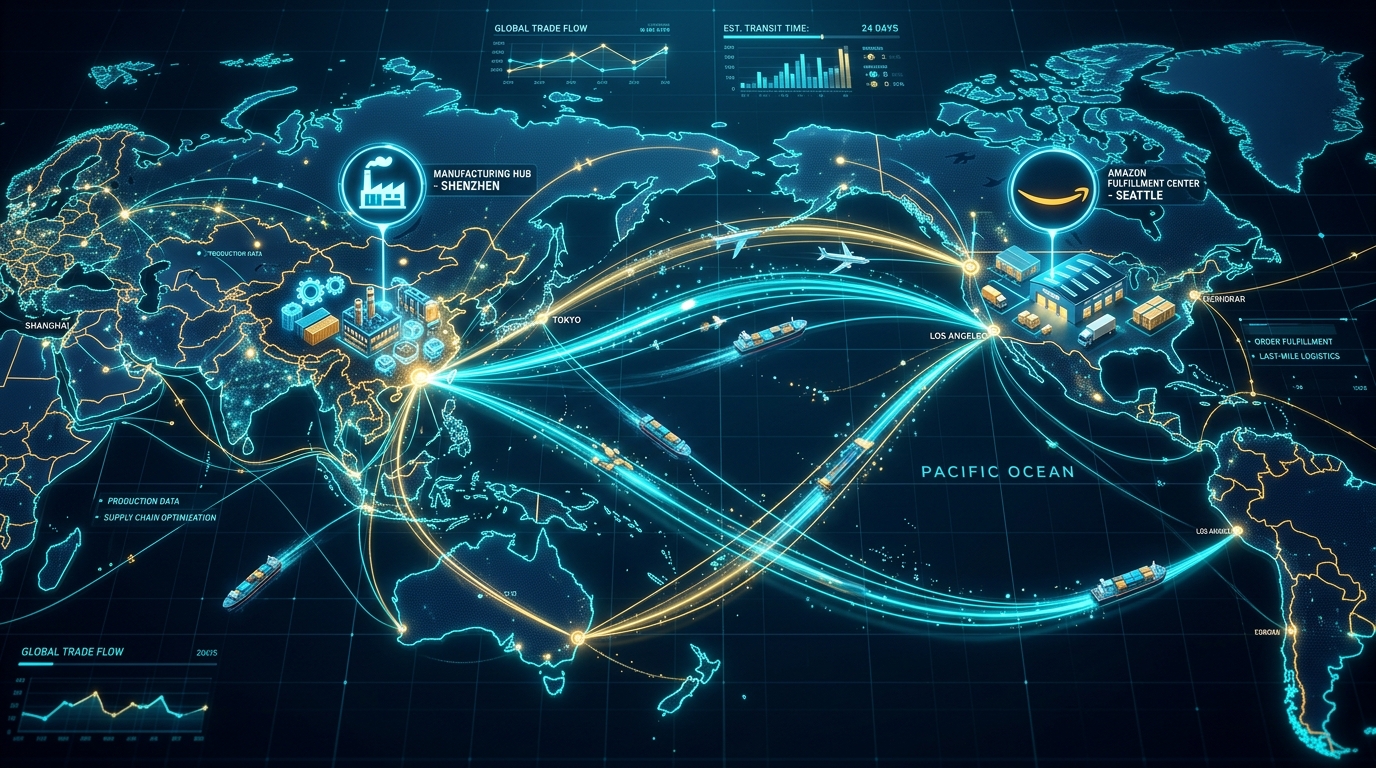
A $1M Amazon private label brand sounds like the finish line. It isn’t — it’s about $83,000 a month in revenue, and at a healthy 25% net margin, roughly $250,000 a year actually lands in your pocket before tax. Revenue is the number people talk about; margin is the number that determines whether the business survives. This guide breaks down what a private label launch actually costs in 2026, where the revenue really goes, and what “good” margin looks like once every fee is accounted for.
A realistic first private label launch on Amazon costs $2,500 to $10,000, with most new sellers landing around $3,800 for inventory, branding, and initial advertising. Once live, Amazon’s combined referral and fulfillment fees typically consume 25-35% of revenue before you even count product cost or ads, and competitive sellers spend roughly 15% of revenue on PPC during launch. After all of that, a healthy private label net margin lands between 20% and 30% — below 8% is considered a warning sign that the business model isn’t sustainable. The sellers who protect margin are the ones who model the full fee stack before sourcing a single sample, not after.
Most new sellers underestimate this number by a wide margin. A realistic first-product launch — inventory, shipping, packaging, branding, photography, and an initial ad budget — typically runs $2,500 to $10,000, with industry survey data putting the average new seller’s spend around $3,800 to get their first product live. Sellers testing the waters with less than $2,000 usually find that wholesale or arbitrage is a more realistic entry point than private label, since branding, custom packaging, and launch-phase PPC are costs private label carries that resale models don’t.
| Cost Category | Typical Range |
|---|---|
| Professional Seller Account | $39.99/month |
| Initial inventory + freight | $1,000–$5,000 |
| Samples & product testing | $100–$500 |
| Branding, logo & packaging design | $300–$1,500 |
| Product photography | $150–$800 |
| Launch-phase PPC (first ~90 days) | $1,000–$3,500 |
| Research tools (Helium 10, Jungle Scout, etc.) | $0–$100/month |
| Trademark / Brand Registry (optional but recommended) | $225–$400 + 3-6 month wait |
This is the part most product-research content skips. On a typical sale, Amazon’s referral fee (8-15% depending on category) and FBA fulfillment fee combine to consume roughly 25-35% of your revenue before you’ve paid for the product itself. For standard-size products above $50, 2026 fee changes added an average of $0.31 per unit — notably higher than Amazon’s own headline “$0.08 average” figure suggested. On top of that, competitive Page 1 sellers spend around 15% of revenue on PPC just to hold position, and two 2024-introduced charges — the Low-Inventory-Level fee and the Inbound Placement fee — now apply if you let stock coverage drop too low or skip Amazon’s distributed inventory placement option.
A simplified example: a product selling at $25 with $6.70 in landed cost (product + freight + packaging) and roughly $6.50 in combined Amazon fees leaves about $6.80 in net profit per unit before overhead — a workable margin, but one that disappears quickly if landed cost drifts upward or ad spend goes unmanaged.
Slow-moving stock doesn’t just sit quietly — storage charges can double, and long-term storage fees kick in on inventory that doesn’t sell within Amazon’s timeframes.
Introduced in 2024 and still active in 2026, this per-unit surcharge applies when stock coverage drops below Amazon’s threshold for your sell-through rate. Keeping 28+ days of coverage on fast movers avoids it.
A common rule of thumb is allocating roughly half your per-unit net profit to PPC during launch — aggressive, but often necessary to build the sales velocity Amazon’s ranking system rewards.
Each refund carries an admin fee on top of the lost revenue, and return processing fees apply per category — a cost that scales with your return rate, not just your sales volume.
Applying a logo via a removable sticker instead of permanent branding is a common early mistake — it often doesn’t qualify for Brand Registry, forcing a costly packaging redo later.
As of January 2026, Amazon eliminated its own FBA prep and labeling services, shifting that cost to sellers or their third-party prep partners — a line item many launch budgets still don’t account for.
| Category | Typical Net Margin |
|---|---|
| Supplements, beauty, pet supplies | 22–32% |
| Home & kitchen, health & personal care | 20–30% |
| General private label average | 15–22% |
| Electronics, grocery, toys | 11–18% |
| Below-benchmark warning line | Under 8% (unsustainable long-term) |
Figures aggregated from 2026 seller-account benchmark data across multiple FBA analytics platforms. Individual results vary by sourcing terms, freight costs, and ad efficiency.
| Model | Typical Net Margin | Startup Cost | Brand Ownership |
|---|---|---|---|
| Private Label | 20–30% | $2,500–$10,000 | Full — you own the brand and listing |
| Wholesale | 10–20% | Lower, often under $2,000 | None — reselling existing brands |
| Arbitrage | 10–25% (highly variable) | Lowest, scales with sourcing skill | None |
Despite lower gross revenue potential, private label sellers reportedly earn around 2.3 times more monthly profit than wholesale sellers running comparable revenue, because owning the brand means owning pricing control — a margin advantage resale models structurally can’t match.
Using a common example: selling 300 units at a 25% margin generates roughly $1,875 in net profit — enough to put a modestly funded launch close to break-even within about four months, assuming steady sell-through and controlled ad spend. The first quarter is typically treated as a data-gathering phase — refining ads, tightening the listing, and building initial reviews — rather than a profit-maximizing one.
High Dreams LLC is a Colorado-based digital growth agency specializing in Amazon store setup, listing optimization, and advertising management — helping sellers model realistic costs and margins before launch instead of discovering the gap after inventory is already ordered. The agency has shipped work for 150+ clients worldwide across Amazon, Walmart, Etsy, and eBay.
Landed cost, fee stack, and realistic net margin modeled before you commit to sourcing.
Branding, photography, and listing optimization built to support the pricing your margin actually requires.
Ad spend and Amazon fee changes tracked continuously so margin erosion gets caught early, not at tax time.
Services include e-commerce management across Amazon, Walmart, Etsy, and eBay, plus AI chatbots for customer inquiries and website development for sellers building beyond the marketplace.
Get a free consultation to model your landed cost, fee stack, and realistic margin before you spend a dollar.
A realistic first launch costs $2,500 to $10,000, with most new sellers spending around $3,800 once inventory, branding, photography, and initial PPC are all counted.
20-30% net margin is a healthy benchmark for an established private label product. Below 8% is generally considered unsustainable long-term.
Referral fees and FBA fulfillment fees combined typically consume 25-35% of revenue before product cost or advertising is even factored in.
Generally yes on a margin basis — private label sellers typically see 20-30% net margins versus 10-20% for wholesale, though private label requires higher upfront investment and a longer runway to first sale.
A common benchmark is around four months, assuming steady sell-through at a 25% margin and controlled ad spend during the launch phase.
Sources: SellerShorts, “How to Build a $1M Amazon FBA Private Label Brand” (2026) · SentryKit, “Your 2026 Guide to Amazon Profit Margins” · Nova Analytics, FBA profit margin benchmark data (600+ connected Seller Central accounts) · StarterX and beBOLD Digital, 2026 Amazon FBA startup cost breakdowns · Dollan Prep Center, “Amazon Private Label vs. Wholesale,” citing Jungle Scout’s State of the Amazon Seller Report · SellerSprite, “How to Build a Private Label Brand on Amazon in 2026.”