No inventory, no shipping, no printing costs — just a file you make once and Etsy can sell forever. That’s why digital products remain one of the most attractive ways to start (or grow) an Etsy shop. But 2026’s market rewards specificity over volume: generic printables are getting buried under a flood of low-effort listings, while niche, well-made digital products are still selling briskly. Here’s what’s actually working, what Etsy takes off the top, and how to avoid the mistakes that sink new digital shops.
The best digital products to sell on Etsy in 2026 are printable planners and journals, editable Canva templates, SVG cut files, printable wall art, wedding and event templates, Notion and productivity templates, resume and business templates, and digital patterns or clip art. The products winning right now share three traits: they solve one specific problem for one specific buyer, they’re editable rather than static, and they come with clear commercial-use terms. Before pricing anything, remember Etsy’s fee stack: a $0.20 listing fee, a 6.5% transaction fee, and a 3% + $0.25 payment processing fee for US sellers — all of which apply to digital downloads exactly as they do to physical goods.
The core economics haven’t changed: you create a file once, and Etsy delivers it automatically for every sale after that. There’s no packing, no postage, and no risk of running out of stock. For sellers juggling a day job or a growing shop, that automation is the whole appeal.
What has changed is the bar for quality. Industry research on Etsy’s digital marketplace notes that 2026 has seen a flood of low-effort, AI-generated printables, and buyers have gotten sharper at spotting them. The sellers pulling ahead aren’t the ones listing the most files — they’re the ones building curated, niche-specific systems instead of generic templates. A “printable planner” is harder to sell than a “printable weekly planner for ADHD parents.” The same logic applies across every category below.
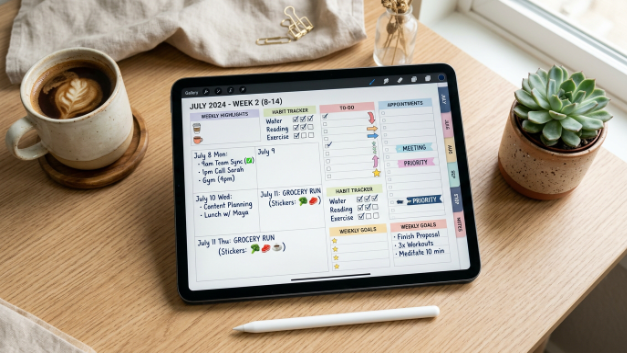
Daily, weekly, and undated planners remain one of the highest-volume digital categories on Etsy, especially GoodNotes and iPad-compatible digital planners. Niche angles — ADHD-friendly layouts, budget-focused planners, wellness journals — outperform generic versions.
Instagram post packs, Pinterest pin templates, and full brand kits sell well to small business owners and coaches who want a professional look without hiring a designer. Niching by industry — templates for real estate agents, for fitness coaches — reduces competition significantly.
Quotes, monograms, holiday designs, and pet-breed graphics for Cricut and Silhouette users are a consistent, evergreen seller. Seasonal bundles — Christmas SVGs in particular — can drive a large share of annual revenue for shops in this niche.
Botanical prints, abstract sets, and typography art benefit from Pinterest and Instagram home-décor trends. Offering multiple print sizes (A4, A3, 8×10, 11×14) in one listing adds value without extra design work.
Invitations, welcome signs, table menus, and seating charts are a proven category — full coordinated suites in a consistent style tend to outsell single items, since buyers are shopping for an entire event at once.
Dashboards for goal tracking, budgeting, and project management appeal to a buyer base actively searching for done-for-you systems rather than blank templates they have to build themselves.
Modern, ATS-friendly resume templates, cover letters, invoices, and proposals target a highly motivated buyer. Shops with 20–30 well-optimized listings in this category can build a meaningful monthly revenue stream.
Sewing and crochet patterns, seamless repeat patterns, and digital paper packs serve both crafters and print-on-demand sellers. Commercial-license versions command significantly higher prices than personal-use-only files.
| Product Category | Typical Price | Competition | Best For |
|---|---|---|---|
| Printable planners | $3–$15 | High — niche down hard | Sellers who can commit to a specific audience |
| Canva templates | $10–$40 (packs) | Medium–High | Designers comfortable with Canva’s template-sharing tools |
| SVG cut files | $1.99–$4.99 | High | Cricut/Silhouette-savvy sellers, seasonal bundles |
| Printable wall art | $3–$25 (sets) | High | Illustrators and pattern designers |
| Wedding & event templates | $8–$35 (suites) | Medium | Sellers who can build full coordinated sets |
| Notion templates | $5–$25 | Low–Medium | Productivity-minded creators, underserved niche |
| Resume & business templates | $8–$20 | Medium | Sellers targeting ATS-friendly, easy-to-edit formats |
| Digital patterns & clip art | $3–$25 | Medium | Crafters and print-on-demand sellers |
Price ranges and competition levels are general guidance compiled from current Etsy seller research, not guarantees — actual results depend on niche, design quality, and listing SEO.
Digital products carry no shipping cost, but they aren’t fee-free. Etsy’s own fee schedule applies the same core charges to digital downloads as it does to physical goods:
| Fee | Amount | When It Applies |
|---|---|---|
| Listing fee | $0.20 per listing | Charged when you publish or renew a listing (every 4 months, or on each sale) |
| Transaction fee | 6.5% of sale price | Charged on every completed sale |
| Payment processing (US) | 3% + $0.25 | Charged per transaction through Etsy Payments |
| Offsite Ads | 12–15% of sale price | Only when a sale is attributed to an Etsy-run external ad; mandatory above $10,000 in trailing 12-month sales |
On a $10 digital download, that’s roughly $1.10–$1.30 in mandatory fees before any advertising — a bigger bite proportionally than on a $30 item, since the flat $0.20 and $0.25 charges weigh more heavily on lower prices. Bundling related files into one higher-priced listing, rather than splitting them into several cheap listings, is one of the simplest ways to reduce your effective fee rate.
A broad “wedding invitation template” competes with thousands of near-identical listings. A “boho bridal shower invitation suite, editable in Canva” targets a buyer who has already decided what they want.
Cricut and Silhouette users need SVG, DXF, and EPS files together, not just one. Canva templates need to be shared as an editable link, not a static file. Wall art needs print-ready, 300 DPI files. Mismatched formats generate refund requests and bad reviews fast.
Buyers building their own product lines from your files need to know exactly what they’re allowed to do with them. Unclear personal-use-versus-commercial-use terms are one of the most common sources of seller disputes in this category.
Listing a $3 file without accounting for the $0.20 listing fee, 6.5% transaction fee, and 3% + $0.25 processing fee means giving away 15%+ of every sale without realizing it. Run the math before you publish, not after your first payout.
High Dreams LLC is a Colorado-based digital growth agency built around eCommerce, with a dedicated Etsy management team handling shop setup, listing optimization, SEO, and branding for sellers moving from idea to a functioning storefront. The agency has shipped work for 150+ clients worldwide across Etsy, Amazon, eBay, and Walmart.
Shop structure, branding, and listing templates built around your niche from day one.
Keyword-driven titles, tags, and descriptions designed for Etsy’s search algorithm, not just readability.
Advertising, pricing, and catalog strategy managed on an ongoing basis as your shop grows.
Services include e-commerce management across Amazon, Walmart, Etsy, and eBay, plus AI chatbots for customer inquiries and website development for sellers ready to build beyond the Etsy marketplace.
Get a free consultation to plan your niche, listings, and launch strategy before you publish your first file.
Printable planners, budget trackers, simple Canva templates, and educational worksheets are the easiest starting points — they’re straightforward to design, easy to explain to buyers, and simple to expand into related listings.
Yes. Etsy applies the same $0.20 listing fee, 6.5% transaction fee, and payment processing fee to digital products as it does to physical goods — the only difference is there’s no shipping cost to factor in.
Niche down to a specific buyer and occasion rather than a generic category, offer editable versions where possible, and be explicit about commercial-use terms and file formats included.
Yes, but competition has increased and generic, low-effort listings are harder to sell than in previous years. Sellers who research demand before creating files and niche down tend to outperform those who guess.
PDF and JPG/PNG for planners and printables, SVG/DXF/EPS together for Cricut and Silhouette users, and an editable Canva template link (not a static file) for Canva-based products.
Sources: Etsy Help Center, “Etsy Fee Basics” · Etsy, Fees & Payments Policy · Etsy, “How to Sell on Etsy” · Current Etsy seller research on trending digital product categories and pricing benchmarks, 2026.


Etsy Email Marketing Guide for Repeat Customers
August 5, 2026 at 9:05 am
“ […] Best Digital Products to Sell on EtsyEtsy Management AI Chatbot for Service Based BusinessesAI Chatbot How AI Is Changing SEO Strategy for Ecommerce StoresAI and E-Commerce Why Every Business Needs an AI Chatbot in 2026AI Chatbot Amazon Buy Box Guide: Win More Sales in 2026 FastAmazon Management How to Optimize Amazon Product ListingsAmazon Management […] “
Etsy Print-on-Demand Tips for Beginners in 2026
August 5, 2026 at 9:11 am
“ […] Best Digital Products to Sell on EtsyEtsy Management Amazon Private Label Business Guide: How to Build a Profitable Brand in 2026Amazon Management How to Optimize Amazon Product ListingsAmazon Management Amazon PPC Guide for BeginnersAmazon Management How AI Is Changing SEO Strategy for Ecommerce StoresAI and E-Commerce AI Automation Trends Businesses Cannot IgnoreAI and E-Commerce […] “