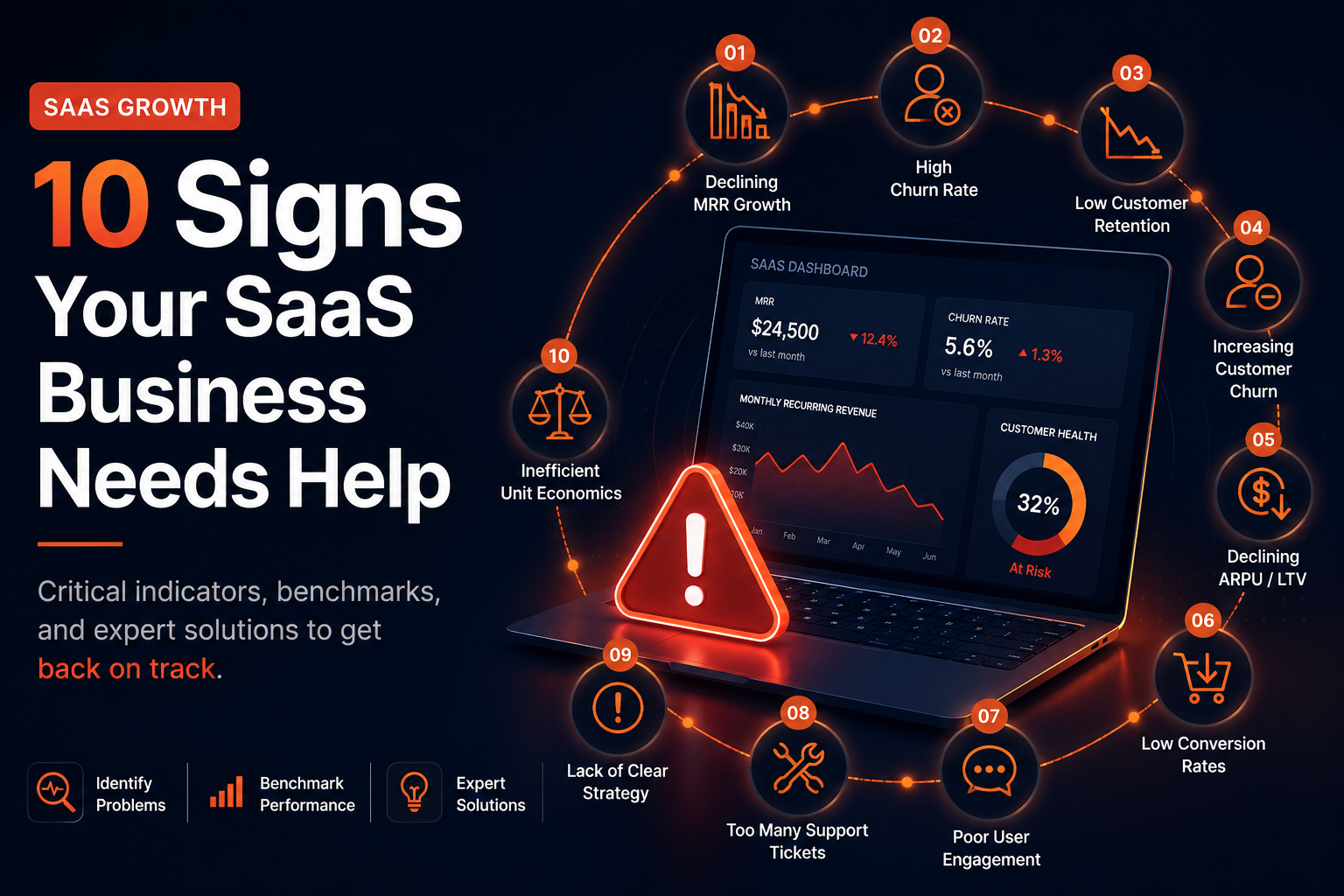
If your phone is ringing more than your team can handle, the cost usually isn’t visible on a P&L line labeled “missed calls.” It shows up as a slower sales pipeline, a receptionist who’s stretched thin, and customers who quietly call the next business on the list.
Your business likely needs an AI voice agent if you’re missing calls during business hours, losing leads because no one answers after-hours or on weekends, spending staff time on repetitive phone questions, or growing faster than your front desk can keep up. An AI voice agent answers every call instantly, qualifies leads, books appointments, and hands off complex conversations to a human — without adding headcount.
Most owners find out they have a phone problem the hard way: a customer mentions they “tried calling twice” before giving up, or a slow month coincides with a stretch where the front desk was short-staffed. The signs are usually there long before the revenue impact becomes obvious. Below is what to look for, what it’s costing you, and how to know if an AI voice agent is the right fix — or overkill.
An AI voice agent is software that answers your business phone line and has an actual conversation with the caller — not a menu of “press 1 for sales.” It combines speech recognition, natural language understanding, and a voice model trained on your business’s services, pricing, hours, and FAQs. It can qualify a lead, check availability, book or reschedule an appointment, answer common questions, and transfer the call to a person the moment the conversation needs a human touch.
The difference from older phone automation is conversational flexibility. A traditional IVR forces the caller into rigid menu paths. A voicemail box just stores a message nobody may ever hear. An AI voice agent listens, understands intent, and responds the way a well-trained employee would — available at 2 a.m. or during your busiest hour, without a hold queue.
Before getting into the signs themselves, it helps to see why this specific problem — the phone, not the website or the inbox — deserves attention first. Industry call-tracking research consistently points to the same pattern: business phones go unanswered more often than owners assume, and the callers who hang up rarely try again.
Figures reflect aggregated 2025–2026 call-tracking and lead-response research, including Nextiva’s analysis of missed-call costs, industry call-analytics benchmarks, and lead-response studies referenced by Harvard Business Review and MIT Sloan. Actual figures vary by industry and call volume.
Layered on top of the missed-call problem is a speed problem. Research on lead response time — most notably the Harvard Business Review analysis of over a million sales leads — has repeatedly found that businesses which respond within minutes convert dramatically more often than those that wait even half an hour. A caller who leaves a voicemail at 6 p.m. and gets a callback the next morning has usually already booked with whoever answered first.
Not every business needs to automate its phone line. But if several of the following sound familiar, the case for one gets stronger fast.
If staff are frequently on other calls, helping in-person customers, or simply outnumbered by ringing lines, calls default to voicemail — and most of those callers won’t leave a message or try again. If nobody in your business can tell you how many calls went unanswered last month, that’s usually a sign nobody’s tracking it, which means it’s probably worse than assumed.
Home services, healthcare, real estate, and hospitality all see a large slice of inbound calls outside a standard 9-to-5 window. Every one of those calls currently goes to voicemail unless someone is on call. An AI voice agent doesn’t need a night shift to answer at 11 p.m.
“What are your hours?” “Do you take insurance?” “How much does X cost?” — if the same handful of questions eat up a large share of call time, that’s automatable work pulling your staff away from higher-value conversations and in-person customers.
Double-bookings, missed confirmations, and back-and-forth scheduling calls are a sign the booking process needs structure. A voice agent connected to your calendar can check real-time availability, book, confirm, and send reminders without a human touching the calendar.
If your average callback time is measured in hours instead of minutes, you’re likely losing deals to whichever competitor answers first. Speed-to-lead research consistently shows the first responder wins the majority of the business — and an AI voice agent’s response time is instant, every time.
Marketing campaigns, seasonal demand, or rapid growth can flood a phone line in a way that permanent hires can’t efficiently absorb, especially if the spike is temporary. A voice agent can handle unlimited simultaneous calls without a hiring cycle.
Routing calls correctly across locations, or staffing bilingual coverage on every shift, gets expensive and hard to schedule reliably. A voice agent can route by location and converse in multiple languages consistently.
Frustrated callers often vent publicly rather than trying again. If phone experience shows up as a recurring complaint in reviews, it’s already affecting new-customer trust, not just the caller who hung up.
Many businesses invest in an AI chatbot for the website but leave the phone — often the highest-intent channel — completely unautomated. That’s usually a gap worth closing next.
A full-time front-desk hire is a five-figure annual commitment once you factor in salary, benefits, training, and turnover — for coverage limited to a single shift. If your call volume doesn’t justify that but still exceeds what current staff can handle, automation closes the gap at a fraction of the cost.
It helps to see the tradeoffs side by side. None of these options is universally “best” — the right choice depends on call volume, budget, and how much of your call flow is repetitive versus genuinely complex.
| Option | Availability | Simultaneous Calls | Typical Cost | Consistency |
|---|---|---|---|---|
| In-house receptionist | One shift, business hours | 1 at a time | High (salary + benefits) | Varies by staff/training |
| Human answering service | Extended or 24/7 | Limited, per plan | Moderate–high, per minute | Varies by script/agent |
| Voicemail / basic IVR | 24/7 | Unlimited (but no conversation) | Low | Most callers never leave a message |
| AI voice agent | 24/7, every day | Unlimited | Flat setup + predictable annual cost | Same script, every call |
The businesses that never miss a call aren’t the ones with the biggest teams — they’re the ones with the fastest answer.
— High Dreams LLC
AI voice agents tend to deliver the fastest payback in industries where phone calls drive revenue directly and call volume is high relative to staff capacity.
Qualifies buyer and renter inquiries, books showings, and answers listing questions around the clock — when a lead calls after seeing a sign, someone (or something) picks up.
Handles appointment scheduling, rescheduling, and common intake questions, freeing front-desk staff for in-person patients while urgent calls route to a human.
Captures emergency and quote requests from technicians who are on job sites and can’t answer the phone, then books the appointment directly into the schedule.
Screens new-client intake calls, collects case details, and schedules consultations, while flagging urgent matters for immediate attorney callback.
Takes reservations and answers hours/menu questions during peak service, when staff are busiest and least able to step away from the floor.
Handles order-status and return calls alongside an e-commerce operations setup, reducing support tickets during high-volume sales periods.
A useful automation strategy is honest about its limits. An AI voice agent is not a universal replacement for every phone interaction, and treating it as one is a common mistake.
A voice agent that’s rushed into production tends to mishandle edge cases and frustrate callers. A structured rollout looks like this:
Mapping your current call volume, common call types, booking system, and the specific questions callers ask most, then defining success metrics before writing a single conversation flow.
Building and testing the actual call flow, connecting it to your calendar or CRM, and running test calls to catch gaps before real customers ever hear it.
Checking accuracy, call handling, and handoff behavior against defined thresholds, then launching with call analytics in place so performance is visible from day one — not a black box.
High Dreams LLC designs, builds, and deploys AI voice agents, AI chatbots, and AI workflow automation for businesses that need to stop losing revenue to slow or missed responses. Every engagement follows an eval-first process — accuracy, cost, and reliability are measured before launch, not discovered afterward.
Businesses served worldwide, shipping AI from idea to production in as little as 1–4 weeks
Fastest reported deployment time for a client’s first AI voice agent
Uptime target for key automated workflows once deployed
On-time delivery track record across client projects
Get a free consultation and a clear, custom quote for an AI voice agent built around how your business actually answers the phone.
An AI voice agent is an intelligent virtual assistant that answers phone calls, understands what the caller needs using natural language processing, and can qualify leads, answer questions, and book appointments in a human-like conversation — without a caller navigating a menu tree.
An IVR routes callers through fixed menu options, and voicemail simply records a message that most callers never leave. An AI voice agent instead holds a real, flexible conversation, understands intent, and can complete tasks like booking or rescheduling directly.
Costs vary by scope, but setup for a business-ready AI voice agent typically starts in the low four figures annually, scaling up with features like calendar integration, multilingual support, and multi-location call routing. A custom quote depends on your call volume and requirements.
Not entirely, and it shouldn’t try to. It’s designed to handle repetitive, high-volume tasks — answering, qualifying, and booking — and hand off complex or sensitive calls to a human team member, freeing your staff for the conversations that need them most.
Yes. When connected to your calendar or booking system, it can check real-time availability, schedule, reschedule, and send confirmations, reducing double-bookings and manual back-and-forth.
A typical rollout takes a few weeks from initial scoping to a validated launch — roughly a week to define the call flow, one to two weeks to build and test it, and about a week to validate performance before going live.


The ROI of Implementing AI Voice Agents: What the Data Actually Shows - highdreamsllc.com
July 11, 2026 at 1:55 pm
“ […] AI Voice Agents 10 Signs Your Business Needs an AI Voice Agent AI Voice Agents How AI Voice Agents Improve Amazon Online Business in 2026 AI Workflow Agents What to Expect When Hiring an AI Automation Agency: A 2026 Guide AI Chatbot Why Businesses Are Investing in AI Customer Support AI Chatbot How AI Automation Is Reshaping Ecommerce Service in 2026 AI Chatbot Why Every Business Needs an AI Chatbot in 2026 […] “
Role of AI voice agent in Healthcare Clinics - highdreamsllc.com
July 13, 2026 at 3:26 am
“ […] more → The ROI of Implementing AI Voice Agents: What the Data Actually ShowsRead more → 10 Signs Your Business Needs an AI Voice AgentRead more → The Role of AI Voice Agents in Growing Your BusinessRead more → Why Businesses Are Investing in […] “
AI Voice Agents Increase Appointment Bookings
July 13, 2026 at 12:58 pm
“ […] ROI of Implementing AI Voice Agents: What the Data Actually ShowsRead more → 10 Signs Your Business Needs an AI Voice AgentRead more → The Role of AI Voice Agents in Growing Your BusinessRead more → Best Industries Using AI Voice […] “
AI Agent for Sales Team - highdreamsllc.com
July 14, 2026 at 7:37 am
“ […] AI Voice Agent: Increase Appointment Bookings The Role of AI Voice Agents in Growing Your Business 10 Signs Your Business Needs an AI Voice Agent How to Select the Best AI Solution Provider for Your […] “
AI Automation Trends Businesses Cannot Ignore - highdreamsllc.com
July 14, 2026 at 7:45 am
“ […] The Future of AI in eCommerce: Trends Every Seller Should Know How AI Can Increase Business Revenue 10 Signs Your Business Needs an AI Voice Agent How AI Is Changing SEO Strategy for E-Commerce […] “
AI Voice Agent vs Human Receptionists: Which Is the Better Choice for Your Business in 2026? - highdreamsllc.com
July 15, 2026 at 6:19 pm
“ […] Voice Agent: Increase Appointment Bookings 10 Signs Your Business Needs an AI Voice Agent The ROI of Implementing AI Voice Agents The Role of AI Voice Agents in Growing Your Business Best […] “
AI Voice Agents for Hotels - highdreamsllc.com
July 21, 2026 at 9:30 am
“ […] Voice Agent: Increase Appointment Bookings 10 Signs Your Business Needs an AI Voice Agent Best Industries to Use an AI Voice Agent in 2026 Voice AI vs Human Call Center AI Voice Agent vs […] “
AI Voice Agents for Dental Clinics - highdreamsllc.com
July 23, 2026 at 6:55 am
“ […] Best Industries to Use an AI Voice Agent in 2026 AI Voice Agent vs Human Receptionists AI Voice Agent: Increase Appointment Bookings AI Voice Agents for Hotels AI Chatbots for Banks 10 Signs Your Business Needs an AI Voice Agent […] “